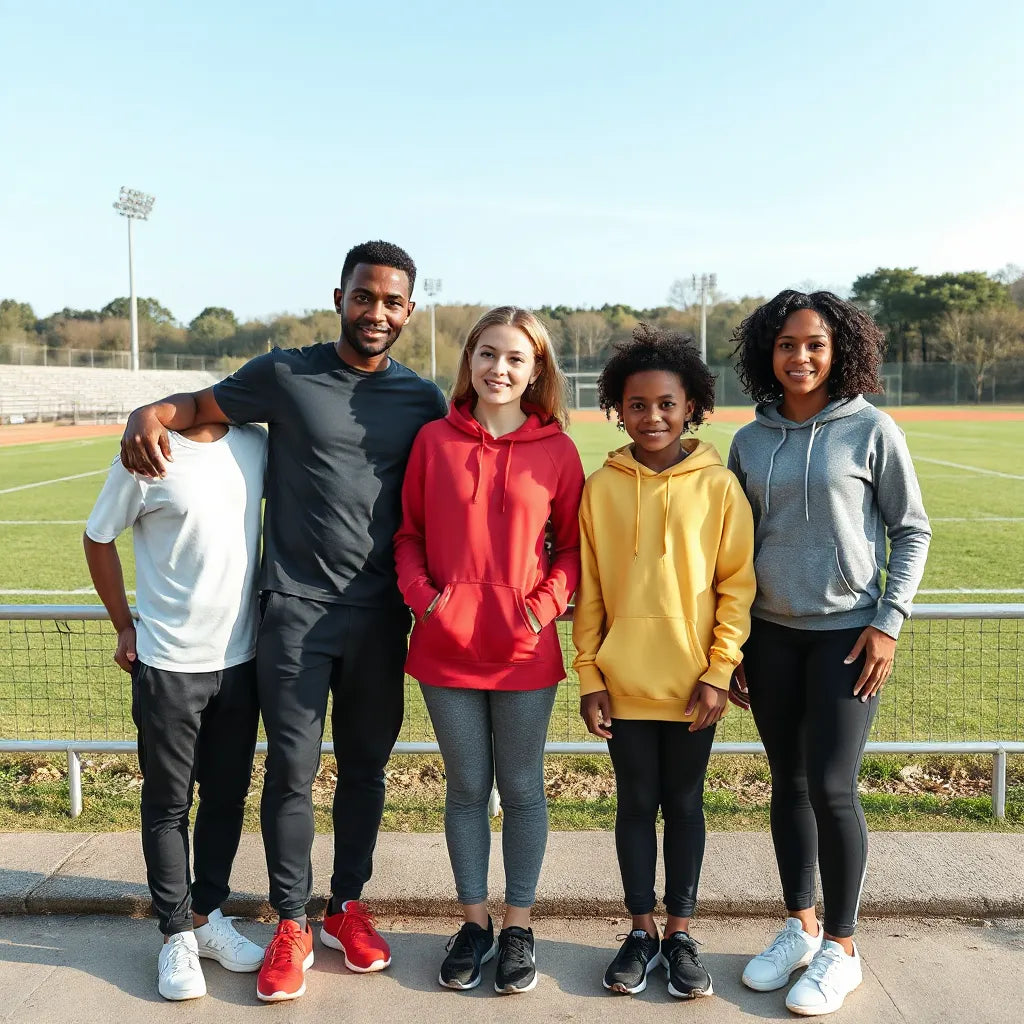
Sports Clothing for Families: Comfort That Lasts
Updated on: 2026-07-12
Shopping for sports clothing for families sounds simple until socks vanish and sizes multiply like gremlins. This guide walks you through building a practical kit for everyone, from kids to grown-ups, without turning your cart into a panic buy. You’ll learn how to match styles, plan for layering, and avoid common fit mistakes. You’ll also get easy buying rules and a few lighthearted sanity checks for the whole season.
1. Common Challenges
2. Comparison: Matching vs. Mixing
3. Picking Sports Clothing for Families (Without the Chaos)
4. Fit and Fabric: The Unsexy Secret to Looking Pulled-Together
5. Styling Ideas That Still Let Everyone Move
6. Care Tips for Multiple Athletes and One Laundry Plan
7. Summary & Recommendations
8. Q&A
Common Challenges
Sports clothing for families is where good intentions go to fight the laundry monster. One minute you’re buying “just a few basics,” and the next you’re sorting jerseys by color like it’s an art museum exhibit. The good news: most problems are predictable. They’re not fate. They’re just shopping math with extra steps.
Challenge 1: Sizes change faster than your enthusiasm
Kids grow in creative ways. One week they’re swimming in tees; the next week they’re suddenly wearing “adult” proportions. For families, the trick is buying a mix of immediate needs and flexible basics. Prioritize items that work across small size shifts—like tees and hoodies—because layers forgive the mid-season growth spurt.
- Choose styles with comfortable room in the shoulders and chest.
- Lean on layering pieces so one “near-perfect” fit can still work.
- For fast growth, consider buying fewer hero items and more reliable staples.
Challenge 2: Everyone wants a different look
One person wants heritage vibes. Another person wants something “more sporty.” A third wants the outfit that looks good in pictures, which is a whole separate sport. Instead of forcing matching for the sake of matching, aim for a shared theme: color palette, silhouettes, and graphics that feel like they belong together.
If your family is built like a relay team, you don’t need everyone to run the same lane. You just need everyone to finish in the same outfit.
Challenge 3: The “event uniform” turns into wardrobe clutter
You buy outfits for games, practices, and weekends away. Then the pile grows. Before you know it, you’ve got sports clothing in five closets and a spare drawer that contains only mystery stains and regret. The fix is a simple rule: buy items you’ll wear outside of game day, not just for it.

Family silhouettes, layered clothing, and matching color swatches
Comparison: Matching vs. Mixing
Matching is charming. Mixing is realistic. Both can be stylish, and neither should require a committee meeting. Here’s a quick comparison to help you decide what your family can actually handle.
| Approach | Pros | Cons |
|---|---|---|
| Match the basics | Easy coordination, cohesive photos, simple packing | May feel less “individual” if everyone has identical pieces |
| Mix the styles, match the palette | Looks intentional without demanding identical gear | Requires a bit of planning up front |
| Coordinate by color accents | Low effort, high flexibility, great for mixed ages | Needs consistent choices so it doesn’t drift into randomness |
If you’re unsure, start with palette coordination. It’s the middle ground between “everyone in the same hoodie” and “why are we wearing three different eras.”
Picking Sports Clothing for Families (Without the Chaos)
Here’s the part where we turn the shopping cart from a thrilling idea into a calm plan. When choosing sports clothing for families, think in sets, not splurges. A set can be as simple as: one tee, one layer, and one graphic piece per person. (Yes, graphics count as emotional support when you’re trying to find your keys.)
Step 1: Build around activities, not fantasies
Consider what you actually do: weekend games, school events, practice days, and the occasional “we’re leaving in ten minutes.” If your schedule is busy, pick pieces that feel decent on arrival and comfortable while you’re moving around.
- For frequent on-the-go days: tees that breathe and hoodies that layer.
- For cooler evenings: a heavier layer that still feels easy.
- For mixed weather: focus on mid-weight options and smart layering.
Step 2: Choose a shared visual language
Families look best when the outfits share a visual code. That could be a vintage tone, a consistent color family, or a recurring graphic style. The goal isn’t identical clothing. The goal is “this looks like a group photo, not a surprise reunion at the wrong event.”
Step 3: Plan for layering like a grown-up
Layering is the cheat code. It covers weather changes, size shifts, and the classic “I was cold ten minutes ago” debate. Start with a base tee. Add a hoodie when it’s chilly. Keep outer layers consistent in color so the whole family looks coordinated without trying too hard.
And if you want to explore heritage-inspired apparel styles that work across ages, you can browse the vibe at About Crossbar Athletic. It’s a useful reminder that crossover style is supposed to feel natural, not forced.
Step 4: Don’t forget comfort is the real flex
Comfort matters more than trends. You can wear the fanciest outfit in the house, but if it’s scratchy or stiff, it won’t make it past the first trip to the car. Look for pieces that feel easy around the neck, shoulders, and arms.

Color-matched family outfits layered for changing weather
Fit and Fabric: The Unsexy Secret to Looking Pulled-Together
Let’s be honest: the best family outfits don’t look “perfect.” They look intentional. Fit and fabric do that heavy lifting. If sports clothing fits well and feels good, it photographs better too. (Not because fabric has magic powers, but because people stand differently when they’re not wrestling their clothes.)
How to evaluate fit quickly
When you’re shopping for multiple people, use a quick checklist. It’s like a taste test, except with fabric.
- Shoulder placement: If the seam sits too far down the arm, the shirt will look off even if the size is technically correct.
- Chest and sleeve movement: If you can’t comfortably lift your arms, you’ll regret it the first time someone tries to catch a ball, a bag, or a late arrival.
- Length: A slightly longer tee can help with layering and reduces awkward bunching.
Fabric basics that matter for family wardrobes
Family life is busy, which means clothes need to handle real life. Pick fabrics that can take repeated wear and washing. You want clothing that doesn’t become a brittle ghost after a few laundry cycles.
- Breathability: Helps on warmer days and keeps you comfortable during long events.
- Layering weight: A hoodie should add warmth without feeling like carrying a small backpack.
- Softness: When kids run around, itchy fabric becomes a complaint factory.
Also, aim for a consistent feel across the family. If one person’s hoodie feels smooth and another’s feels rough, the outfits might look coordinated on day one and mismatched by day seven. Matching comfort is part of matching style.
Styling Ideas That Still Let Everyone Move
Sports clothing for families doesn’t have to look like everyone dressed in the same classroom closet. You can keep it cohesive and still let each person express their own flavor. Think of it like a playlist: same genre, different tracks.
Idea 1: Color palette styling
Pick one main color for the group—emerald tones, cream neutrals, or another family-friendly shade—and mix it with matching accents. Use tees for the base and hoodies for the layer. The look stays connected even when personalities vary wildly.
Idea 2: Graphic hierarchy
Use one bold element per outfit: a big illustrated back graphic or a small chest logo. If everyone has a large graphic everywhere, it can turn into visual noise. One hero element keeps the outfit vintage-inspired and easy to read.
Idea 3: The “same vibe, different level” plan
For families with different ages and preferences, give each person a role. Example: one person wears the hoodie layer, another wears the tee-only base, and a third adds the hoodie on cooler days. It creates a coordinated look without demanding identical items.
If you want a quick way to find apparel styles with a heritage, country-club feel, you can start at Crossbar Athletic. It’s a straightforward route to the kind of outfits that look like they belong together.
Care Tips for Multiple Athletes and One Laundry Plan
Laundry is the true head coach. Get care right and your sports clothing for families stays in rotation instead of living in a “maybe later” pile.
Gentle wash habits
Use a standard wash cycle and avoid harsh treatments that can wear down fabric over time. When in doubt, wash less aggressively. Clothes don’t need to be treated like they’re trying out for demolition derby.
Drying strategy
Skip overly intense heat when possible. High heat can shorten the lifespan of fabric and graphics. If you air dry, you’re basically giving your outfits a spa day.
Storage that doesn’t stress you out
Keep outfits grouped by person and season. A simple approach helps you avoid the “where’s the hoodie that matches the tee that matches the mood” search.
- Sort by who will wear it, not by what it looks like on the hanger.
- Fold tees and hoodies neatly to reduce wrinkles.
- Store seasonal items in labeled bins so you’re not guessing in November.
Summary & Recommendations
Sports clothing for families works best when you coordinate smartly and buy with real life in mind. Start with a shared palette, choose comfortable layers, and focus on fit that supports movement. Instead of chasing matching outfits item-by-item, aim for a consistent visual language so everyone looks like they came from the same team roster, even when they didn’t.
My practical recommendations:
- Build around tees and hoodies because layering handles weather and growth.
- Choose one or two repeating colors to unify the wardrobe.
- Prioritize comfort so the clothes survive both games and snacks.
- Care for items gently to keep them looking fresh longer.
If you’re ready to refresh your family’s rotation with heritage-inspired style, you can explore options at Contact Crossbar Athletic to ask questions before you click “add to cart.”
Q&A
How many pieces should a family buy at the start of the season?
Start small and build from there. A reliable baseline for each person is one tee and one hoodie, plus a spare tee if your schedule is packed. Add more only after you see which pieces get worn most. The goal is “frequently used,” not “technically owned.”
What’s the easiest way to coordinate outfits for different ages?
Use a shared color palette and a consistent graphic style. Then let each person choose the “how”: one might wear the hoodie layer, another might prefer a tee-only look. Coordination works best when it’s about visual harmony, not identical clothing.
Should we aim for exact matching or coordinated mixing?
Exact matching can be cute, but coordinated mixing is usually more practical. Matching basics keep photos cohesive and packing simple, while mixing styles helps each person feel comfortable and like themselves. Think “same vibe,” not “same costume.”
How do we avoid fit problems when sizes are changing?
Pick items that layer well and don’t require perfection to look right. Slightly forgiving fits help during growth spurts. Also, watch shoulder placement and sleeve length more than you obsess over exact measurements. Fit that feels right beats fit that only looks right on a measuring tape.
What care habits help sports clothing last longer?
Wash gently, dry with moderate heat or air dry, and store items neatly. Graphics and fabric hold up better with less aggressive treatment. If you treat your clothes like repeat guests at a friendly party, they’ll usually show up for the next event too.
Where can we find heritage-inspired family apparel?
Look for brands that focus on vintage-inspired tees and hoodies with consistent design details. If you want a good starting point with that heritage crossover energy, explore Crossbar Athletic and browse the collection style.
About the Author
Crossbar Athletic is written by a team with a long affection for heritage apparel and the kind of crossover style that doesn’t take itself too seriously. The expertise here is practical: outfit coordination, everyday layering, and choosing pieces that feel good across ages. Thanks for reading—may your hoodies be soft, your tees be sturdy, and your laundry baskets be just a little less mysterious.
Disclaimer: This article is for general style and shopping guidance only. Product availability, sizing, and care recommendations can vary by item and manufacturer, so always check the specific details for what you buy.