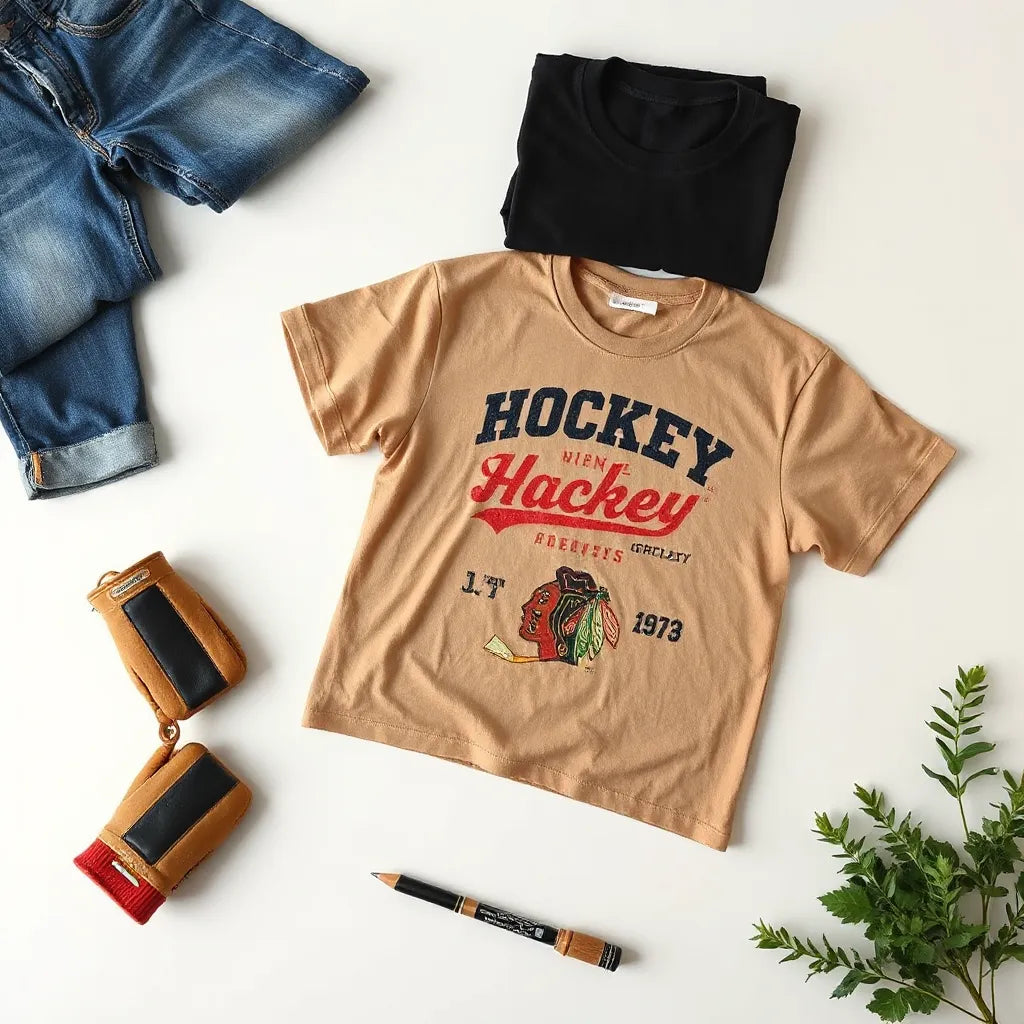
How to Style Vintage Hockey T-Shirts for Modern Wear
Updated on: 2026-07-19
Vintage hockey t-shirts feel like borrowing a time machine—minus the motion sickness. They capture old arenas, old logos, and that familiar hum of winter nights on the ice. But buying the right one is more science than slapshot. From fabric age to fit and care, this guide helps you spot quality and style without turning your closet into a “mystery pile.”
Vintage hockey t-shirts: the closet’s coolest souvenir
There are souvenirs that sit on shelves, and then there are souvenirs that get worn. Vintage hockey t-shirts belong to the second category. They look like they’ve lived through at least one overtime period and somehow still have energy left.
Maybe you love the nostalgia. Maybe you just want a shirt that says “team spirit” without requiring you to argue about line changes at brunch. Either way, the good news is you can find pieces that look authentic, feel solid, and don’t fall apart the first time you wash them like a normal person.
This guide walks you through what to look for, what to avoid, and how to style these tees so they look like you planned the outfit. Along the way, we’ll keep it simple, practical, and slightly amused—because if a shirt can survive a decade, it can survive your laundry habits (with guidance).
Did You Know?
- Many older tees were built with sturdier cotton blends than the “soft and flimsy” vibe you sometimes see today.
- Logo placement used to be a bigger deal. Some designs were printed for visual impact at arm’s length in a stadium, not for a selfie at 3x zoom.
- Tag styles and collar shapes can help date a shirt. No, you don’t need a jersey detective badge—just a little pattern recognition.
- Faded colors can be intentional, but not all fading is “vintage charm.” Sometimes it’s “sunburned in the back of a truck.”
Comparison: Pros & Cons
- Pros: Story-driven style, unique graphics, often more character than modern equivalents, and a break from generic retail.
- Pros: You can build a look that feels team-rooted while still being casual—no need for full game-day uniform cosplay.
- Cons: Fit can vary a lot because sizing wasn’t always consistent across eras and brands.
- Cons: Fabric can be delicate. Some shirts age well, others age like milk (you can’t un-sour the past).

Retro sports lighting, faded color swatches, collar close-up
Buyer’s Checklist
If you’re hunting for vintage hockey t-shirts, treat it like a treasure quest with fewer traps and more sleeves. Here’s a checklist that keeps you out of the “I swear it looked fine in the listing” zone.
1) Start with the basics: condition and wear
- Check the collar for stretching or fraying. A good collar keeps the whole shirt looking intentional.
- Look at the hem and seams. Uneven stitching can hint at past repairs or rough storage.
- Inspect the sleeves. “Relaxed” is one thing; “sad and uneven” is another.
2) Evaluate fabric honestly
- Feel the weight if possible. Heavier tees tend to hold up better over time.
- Watch for thinning spots, especially near armpits and along high-friction areas.
- If you see small holes, measure them. Tiny defects can be fine; large gaps can become a constant wardrobe reality check.
3) Read the logo like a book
- Cracks in prints can be normal, but deep peeling is a deal-breaker for most buyers.
- Check whether the graphic looks aligned and intact. Misprints happen, but heavy distortion usually signals age issues.
- Color fidelity matters. If the shirt’s palette is mostly intact, you’re more likely to get a clean look in outfits.
4) Fit: pick your vibe
- Want a relaxed, vintage silhouette? Look for a slightly roomier chest and a natural shoulder line.
- Want a cleaner, modern fit? Consider whether the shirt has shrunk over time. Older tees sometimes shrink in width.
- Remember: vintage sizing is a friendly liar. Compare measurements when available.
5) Decide if you’re buying a graphic tee or a collector piece
Not all vintage hockey shirts are meant for display-only living. Some are built to be worn hard and washed regularly. Others are better treated like a museum buddy. Pick a lane early so you don’t baby a tee that wants to be your daily driver.
How to Style Vintage Hockey Tees
The secret to styling vintage sports tees is balance. You want the shirt to be the hero, not the entire cast. Aim for clean lines, simple layers, and color harmony. Think “locker-room nostalgia,” not “wardrobe experiment.”
Casual day: tee + jeans + one smart detail
Pair a vintage hockey t-shirt with dark jeans and clean sneakers. Add one detail that looks deliberate: a watch, a belt, or a cardigan that actually fits. If your tee has a loud back graphic, keep the front simple and let the shirt do the talking.
Layering without the costume energy
A lightweight overshirt or vintage-style jacket works well. The goal is to frame the graphic, not hide it entirely. If the tee is already faded and soft, go for a layer with structure so the overall look stays grounded.
Country-club casual: the “crossover” move
Crossbar Athletic vibes are rooted in heritage and that small-chest-logo, big-graphic contrast. If you like the story of hockey in a classy outfit, you can bridge the gap with vintage color palettes like emerald, cream, and serif-style attitude—without turning your look into a themed party.

Crossbar Athletic Embroidered Trucker
If you want a modern layer that feels like it belongs next to a vintage tee, check out the embroidered trucker here: Crossbar Athletic Embroidered Trucker. It’s a nice way to add structure while keeping the graphic tee in charge.

Outfit layout: tee graphic, denim texture, jacket silhouette
Care Tips That Keep the Past Looking Good
Vintage is fun until it meets your laundry routine. Treat it with respect and you’ll be wearing the shirt long after the current trend has exited stage left.
Wash like you’re handling a fragile artifact
- Wash cold. Hot water can stress aged prints and fabrics.
- Turn the shirt inside out. This helps protect the graphic from friction.
- Use a gentle cycle if your machine offers it. No need to spin the shirt like a salad.
Choose detergent carefully
Skip harsh stuff. Strong detergents can be rough on older fibers and printed designs. A mild approach is usually the sweet spot.
Drying: the low-heat philosophy
- Air drying is safest for long-lasting graphics.
- If you use a dryer, keep heat low. High heat can speed up fading and weaken fabric.
Spot-clean first when possible
If you have a small stain, spot-clean before washing the whole shirt. This reduces stress on the entire fabric panel and helps keep the print looking crisp.
Storage: give it breathing room
- Store in a cool, dry place.
- Avoid tight compression. Old fabric can crease permanently.
- If you hang it, use gentle hangers and keep it out of direct sun.
If you’re also exploring vintage-inspired apparel, you might like the story-led focus at our heritage and style. It’s the same idea: thoughtful materials, timeless looks, and fewer “why did I buy this?” moments.
Final Thoughts & Advice
Vintage hockey t-shirts are more than just old cotton and faded ink. They’re wearable history, the kind you can toss on with jeans and head out the door. When you shop, focus on condition, fabric stability, and how the graphic is holding up. When you style, keep the outfit simple and let the tee be the statement piece.
One more insider tip: if you find a shirt that fits you well and feels solid, consider grabbing it—even if the price is a little higher than the “mystery box” listings. The best vintage purchases are the ones you wear repeatedly, not the ones that sit quietly in a drawer like a regret.
Want a clean, heritage-forward companion piece for your vintage tee rotation? Browse Crossbar Athletic for apparel designed with that crossover crowd in mind.
Q&A Section
How can I tell if a vintage hockey t-shirt’s print will last?
Look for signs of peeling, heavy cracking, or flaking. Light cracking can be part of the shirt’s character, but if the graphic appears unstable or looks raised in large areas, it may not survive regular wear and washing.
Should I buy vintage hockey t-shirts that are faded?
Yes—if the fading looks even and the colors still have shape. Uneven fading, especially around high-friction points, can indicate harsh storage or uneven wear. The best faded tees look “earned,” not “damaged.”
What fit should I choose if sizing is inconsistent?
Go by measurements when possible. If you can’t measure, compare your favorite modern tee’s chest and length to the listing’s approximate fit. Vintage cuts often run different in width and shoulder seams, so prioritize how it sits on the shoulders.
Is it worth repairing small holes in vintage hockey tees?
Often, yes. Tiny holes can be patched or darned, and many people enjoy the “battle marks” look. If the damage is large or near key seam areas, it may be less practical for everyday wear.
About the Author
Crossbar Athletic
Crossbar Athletic is all about vintage-inspired apparel for the crossover crowd—hockey players who golf, and golfers who play hockey. The team focuses on heritage details, small chest logos, and big illustrated back graphics that look right with jeans and good stories. This guide reflects our insider approach: practical picks, calm styling, and fewer wardrobe regrets. Thanks for reading—now go find your next tee with confidence.
Disclaimer: This article is for general shopping and styling guidance. Product availability and condition can vary by seller and item, so use measurements and photos to confirm details before purchasing.